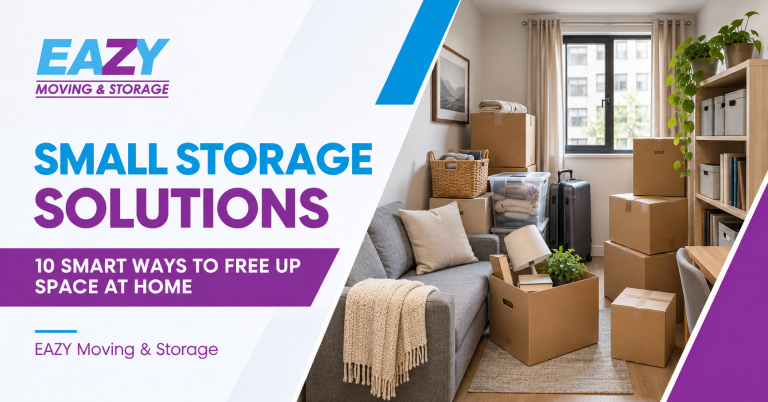
Good small storage solutions help you make better use of the space you already have before you start thinking about a bigger home, another cabinet or an extra room. That might mean clearing out a cupboard that’s full of things you no longer use, making use of the space under the bed, or moving seasonal belongings somewhere they’re not competing with everyday items.
This tends to happen gradually. A few boxes are left in the spare room, luggage stays on top of the wardrobe after a trip, work supplies creep into the dining area, and eventually it feels as though every cupboard is full. The house may not actually be short on space. The space just isn’t working particularly well.

There isn’t one trick that fixes every home, either. Some people need better shelving. Others need to get rid of things they’ve been keeping out of habit. And sometimes there really isn’t enough room, in which case a compact storage unit can be more useful than squeezing another piece of furniture into an already crowded room.
Here are ten ideas that cover both sides of the problem.
1. Small Storage Solutions Usually Start With Less Stuff
The quickest way to create space is to stop storing things you no longer want.
That sounds obvious, but it’s often skipped. People buy organisers first and sort the contents later, which can leave them with beautifully labelled boxes full of things they still don’t use.
Start with one small area rather than the whole house. A kitchen cupboard, one wardrobe shelf or the drawer everyone avoids is enough.
You’ll usually find a mix of:
- Things you use all the time
- Things you want to keep but rarely use
- Items that could be donated or sold
- Broken or expired things that can go
- Belongings that would make more sense stored elsewhere
Once those decisions are made, you may find there’s already room available. That’s often more useful than adding another basket or shelf.
It also makes the rest of the organising process easier because you’re only trying to find a place for things you actually intend to keep.
2. Look Up Before You Add Another Cabinet
Vertical storage is useful because it adds capacity without taking away more floor space.
A blank wall above a desk, dresser or kitchen counter can often hold a shelf. Tall, narrow units can also work well in apartments where there isn’t much room to spread furniture sideways.
In a living room, floating shelves can take books and smaller decorative pieces off tables. In the kitchen, a narrow rail or wall shelf can free up part of the counter. Bathrooms often have useful wall space above the toilet or beside the mirror as well.
You don’t need to fill every wall, though. Too many open shelves can make a small room feel busier than it did before. A few shelves placed where they’re genuinely useful usually work better.
This is one of those small storage ideas that costs relatively little but can make a room feel noticeably less crowded.
3. Use the Space Under Beds and Other Furniture
The area beneath furniture is useful because it already exists and usually isn’t doing much.
Under-bed storage is the obvious example. Spare sheets, shoes, travel bags and seasonal clothes can all fit there without adding another piece of furniture to the room.
Low containers are usually enough. If you need regular access, wheeled boxes are easier to pull out. If something will stay there for months, a lidded container helps keep dust away.
Depending on the furniture, you may also have usable space under a sofa, bench or raised cabinet.
If you’re replacing furniture anyway, look at beds with built-in drawers or a lift-up base. They can hold far more than a couple of boxes and are particularly handy in bedrooms without much wardrobe space.
Measure first, though. A box that’s slightly too tall is still useless, no matter how perfect it looked in the shop.
4. Buy Furniture That Solves More Than One Problem
Furniture with built-in storage can save space, but only when the piece itself suits the room.
A storage ottoman is a good example. It can hold blankets or cushions and still work as seating. A coffee table with drawers keeps remotes, magazines and chargers out of sight. Near the entrance, a storage bench can give shoes and bags somewhere to go instead of leaving them on the floor.
Other useful options include beds with drawers, bedside tables with shelves, and headboards with built-in storage.
The temptation with multifunctional furniture is to assume that more compartments automatically make it better. They don’t. If the bench is so large that you have to squeeze around it, the extra storage probably isn’t worth the floor space you’ve lost.
Think of it as replacing furniture you already need with something more useful, rather than adding more furniture purely for storage.
5. Deal With Small Clutter Before It Spreads
A room doesn’t need large piles of boxes to feel messy. Sometimes the problem is twenty small things with nowhere obvious to go.
Chargers, pens, toiletries, toys, receipts, craft supplies and remote controls all fall into this category.
This is where small containers are genuinely helpful. Drawer dividers can separate everyday items, baskets work well on open shelving, and clear boxes are useful for things you want to identify quickly.
Labels can make sense for things you don’t use every day, but there’s no need to turn the house into a warehouse. “Cables”, “travel” or “kids’ crafts” is usually enough.
More importantly, the system needs to be easy to live with. If putting something away involves opening three boxes and removing a lid every time, it probably won’t stay organised for long.
6. Small Storage Solutions Can Hide in Awkward Spaces
Doors, corners and narrow gaps can provide useful storage where standard furniture won’t fit.
The back of a door is a good example. Hooks can hold bags or jackets, while hanging organisers can take shoes, scarves or smaller cleaning supplies.
There may also be a narrow gap beside a wardrobe, washing machine or refrigerator that can fit a slim rolling shelf. Awkward corners can sometimes take a compact triangular shelf or a basket stand.
These ideas are especially useful in rentals because many of them don’t involve permanent cabinetry or drilling.
There’s still a practical limit. A shelf that makes the hallway difficult to walk through or a hanging organiser that stops the door from closing properly isn’t really helping.
The best small storage solutions tend to disappear into the room rather than make you work around them.
7. Stop Seasonal Things Taking Up Everyday Space
Things used a few times a year don’t need the easiest cupboard space.
Suitcases, holiday decorations, heavier clothing, camping gear and spare bedding are all common offenders. They’re worth keeping, but they don’t need to sit beside things you reach for every week.
Move them to higher shelves, under-bed containers or labelled boxes in a less-used area of the house.
The same idea works well for wardrobes. Keep the clothes you actually wear within easy reach and move occasional pieces somewhere less convenient.
Before packing clothes or linen away, make sure they’re clean and completely dry. That matters more if they’ll stay packed for several months.
If seasonal belongings are still taking up too much room, personal storage in Dubai can be useful for things you want to keep without giving them everyday space at home.
8. Use the Garage or Utility Area Properly
A garage can hold a lot, but only if it isn’t treated as the place where everything gets dumped.
Once boxes start covering the floor, it becomes hard to find anything and even harder to use the space properly.
Wall shelving can keep larger boxes off the ground. Hooks work well for bicycles, ladders and tools, while smaller containers can keep hardware, cleaning supplies and similar items together.
If the garage still needs to fit a car, keeping the floor clear matters even more.
There is a point, though, where another shelf won’t fix the problem. If the garage is already organised and still overflowing, some belongings may simply need to be stored elsewhere.
That’s a useful distinction. Poor organisation and genuinely not having enough room are two different problems.
9. Keep Business Stock From Becoming Household Clutter
Home businesses can outgrow domestic storage quickly.
It often starts with a few boxes in a spare room. Then more stock arrives, packaging supplies build up and paperwork takes over a cupboard. Eventually, the business is using spaces that were supposed to be part of the home.
If the amount is still small, keep work items in one dedicated area. A single shelving unit is easier to manage than stock spread through several rooms.
Once that area is full, it may be worth moving some of the business storage out of the house.
EAZY’s business storage in Dubai can be used for stock, files, equipment and other work-related items that don’t need to stay at home or in the office every day.
For a growing online business, this can be a useful step before taking on a bigger office or warehouse.
10. Small Storage Solutions Sometimes Mean Moving Things Out
When the home is already organised but still full, a small external unit can be more practical than adding another cabinet.
You may only need somewhere for five or six boxes, luggage, sports equipment, hobby supplies or seasonal belongings. Those things can take up useful space at home without needing a large storage room of their own.
That’s where small storage units Dubai can make sense.
A compact unit lets you move the overflow out without paying for far more room than you need. It can also work well for people between homes, anyone temporarily downsizing or families who simply want to reclaim a spare room.
If you prefer to organise and access the unit yourself, self storage in Dubai is another option.
Before choosing a size, make a quick list of what you’re actually storing. Five boxes and two suitcases need a very different space from a bed, desk and several pieces of furniture.
Home Storage or External Storage?
The easiest way to decide is to think about how often you use the item.
Things you need regularly are usually better kept at home. Things you only touch every few months can move into less convenient areas, while belongings you rarely need may be better candidates for external storage.
| Option | Usually works best for |
|---|---|
| Cupboard organisers | Everyday household belongings |
| Under-bed boxes | Bedding, shoes and seasonal clothes |
| Wall shelves | Books and frequently used smaller items |
| Multipurpose furniture | Small rooms where floor space is limited |
| Garage shelving | Tools, sports gear and household equipment |
| Small storage unit | Boxes, luggage and rarely used belongings |
One useful test is whether you keep moving the same item from one room to another because there’s nowhere sensible for it.
If that keeps happening, the item probably doesn’t need prime space inside the home.
Choosing Small Storage Units Dubai Residents Can Actually Use
A useful small unit is one that fits what you have without leaving a lot of paid-for empty space.
Before booking, count the boxes and note anything awkwardly shaped. Suitcases, sports gear and small pieces of furniture can take up more room than you expect, while neatly packed boxes may take up less.
Think about access as well. If you’ll need something regularly, keep it near the front. If the unit is mainly for things you won’t touch for six months, storage conditions and security may matter more than how quickly you can reach every box.
For belongings that can be affected by Dubai’s heat or humidity, including some clothing, furniture and electronics, climate-controlled storage may also be worth considering.
EAZY offers different storage options in Dubai for smaller and larger requirements, so the unit can be chosen around what you actually need to keep.
Keep Small Storage Solutions Simple
The best small storage solutions are the ones you can keep using without turning organisation into another job.
Start with what costs nothing. Get rid of things you no longer need, rearrange cupboards and move seasonal belongings out of the easiest spaces. After that, use shelves, containers, hidden areas and multifunctional furniture where they genuinely solve a problem.
You don’t need every box to match or every shelf to look perfect. The goal is simply to make the home easier to use and to stop belongings from constantly getting in the way.
And if you’ve already done that but still need more room, external storage can take the pressure off without forcing you to throw away things you still want.
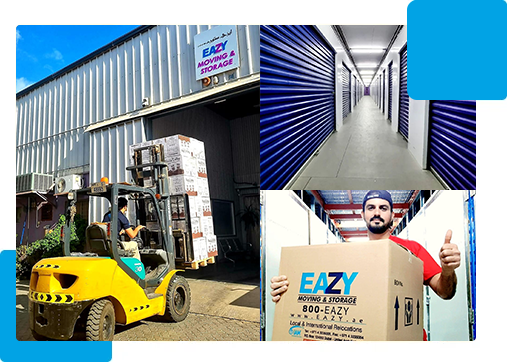
EAZY Moving & Storage provides personal, self-storage and business options for people who need extra room in Dubai.
If you’re unsure what size would suit your belongings, contact EAZY Moving & Storage and discuss what you’re planning to store.
Frequently Asked Questions About Small Storage Solutions
Start with unused areas such as under beds, behind doors and higher wall space. Drawer organisers, baskets and furniture with built-in storage can help as well.
Tall shelving, under-bed containers, over-door organisers and multifunctional furniture work well because they create storage without using much extra floor area.
Yes. Small units can work well for boxes, luggage, seasonal belongings, sports gear and other items that don’t need a full room-sized unit.
Boxes, travel bags, clothing, hobby supplies, sports equipment and smaller amounts of business stock are common examples. Check with the storage provider if you’re unsure about a particular item.
Count your boxes and list any larger or awkward items. A storage provider can then help you estimate how much space you’ll actually need.
Keep regularly used belongings at home. External storage is usually more useful for things you want to keep but don’t need often, especially if they’re taking up valuable living space.
EAZY offers storage options for smaller and larger requirements, so the amount of space can be matched to what you need to keep.
Looking for a Trusted Storage & Moving Company in Dubai and Abu Dhabi?